
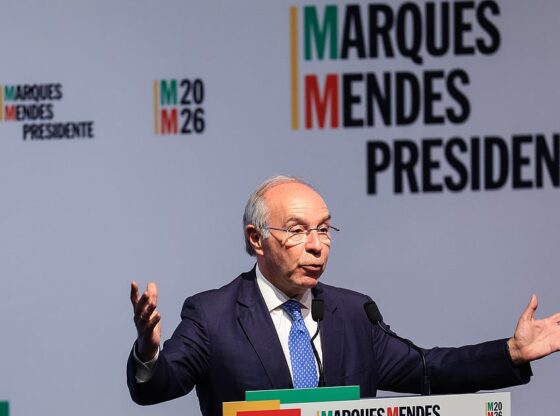

Presidential candidate Marques Mendes lamented this Saturday, November 1, that emigrants continue to be treated as “second-rate Portuguese” and accused political parties of being “afraid of electronic voting”.
During a visit to London, the candidate described as “unfairly reductive” the voting system for Portuguese residents abroad, which requires voting in person in presidential elections and does not allow postal voting, as happens in legislative elections.
The result is what he called “first and second category elections” and said that “the parties are responsible for this situation, from right to left.”
In the pre-election campaign, Marques Mendes revealed, in statements to journalists, his desire to introduce “open presidencies” abroad, if he is elected, to “help put an end to this matter”.
“I believe that a President of the Republic exists to be firm, with the parties, to correct what is wrong. I intend to have a firm voice telling the parties, all of them, from right to left, the following: the Portuguese abroad are not second-rate Portuguese”, he told journalists.
The open presidencies, he said, would last around a week to ten days and could extend to several countries, where the President of the Republic would be accompanied by ministers, secretaries of State, party representatives and senior State officials to discuss issues relating to Portuguese communities abroad.
In addition to the possibility of in-person and postal voting in all types of elections, Marques Mendes argues that Portuguese residents abroad should also be given the option of voting digitally, criticizing, once again, the parties for blocking this progress.
“I have no doubt. Electronic voting does not yet exist because there are parties that are afraid of the emigrants’ vote. They are afraid that this will greatly increase participation and that, as a result, the results that are known from the point of view of the territory will be altered”, he stated.
Marques Mendes claimed responsibility for the creation of RTP Internacional in 1992, despite skepticism within the Government itself.
“I took these decisions because I really believe in this idea. Portugal is not a territory, it is a nation. And that is why I am here in the communities today”, he highlighted.
After a morning of visits to Portuguese businesses in Stockwell, the neighborhood in south London known as “Little Portugal”, we had lunch with activists. Today’s program also included an interview with a local radio station and a visit to an association party.
On Sunday, head to the island of Jersey, where a large Portuguese community lives, before returning to Lisbon at the end of the day.
The presidential elections are scheduled for January 18, 2026.