
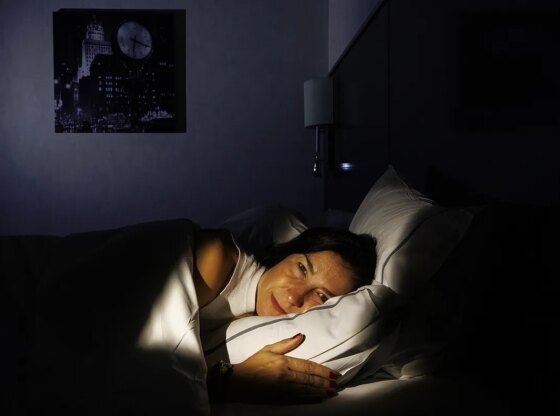

This weekend we will turn the clocks back again to adapt to winter time. We’ve been doing it for decades: each autumn y primavera We move the hands and set a time. However, this routine could be near its end. The President of the Government, Pedro Sánchez, has asked that it disappear in Europe because “it no longer represents energy savings” and “it alters circadian rhythms” twice a year.
This is not the first time it has been raised. “It was already tried in the European Union and it did not go ahead due to lack of consensus,” recalls Carlos Egea, pulmonologist and coordinator of Sleep Respiratory Disorders of the Spanish Federation of Sleep Medicine Societies (Separ).
Even so, welcomes that the topic is being discussed again. “From a scientific point of view, it is good news. “We have been defending for more than ten years that the human body needs to synchronize with sunlight every morning and that the healthiest thing is to always maintain the same schedule.”
science supports this argument. Various studies indicate that avoiding time changes could reduce cases of insomnia, obesity, traffic accidents and even stroke. A recent analysis of Stanford Medicine estimates that maintaining a permanent standard schedule would prevent up to 300,000 strokes and 2.6 million cases of obesity per year.
The real problem: we live out of adjustment
Why are we so affected by something that “only” changes for 60 minutes? Because the time change reaches a body that already lives out of rhythm. Spain is one of the European countries that sleeps the least during the week. Going to bed late, waking up early and feeling tired is common. And we compensate by sleeping more on the weekend.
This habit has a name: jet lag social. “The sleep schedule from Monday to Friday does not coincide with that of the weekend and the body is out of place. That is why Mondays are so difficult,” explains Egea. If we add an artificial time lag to this imbalance, the body becomes even more out of balance.
“Even if it is only an hour, the change already represents a cost for our body. It disturbs sleep, alters melatonin secretion and modifies cortisol. It seems silly, but it’s enough to throw us out of sync.“says Francisco José Martín, sports doctor, specialist in sports cardiology and children’s cardiologist.
The people who pay the most are the seniors and the children. “Children already sleep less than they should during the week and, if we move the time on top of that, their body becomes even more out of place,” Egea specifies.
While adults usually adapt in two or three days, the extremes of life may require up to a week. “Their biological clocks are more fragile and any time change takes its toll on them,” says the Separ spokesperson.
The reason is simple: As times change, we also change exposure to natural light. “The body has a central clock in the brain that needs light and darkness to know when to activate and when to disconnect. If we break that rhythm, we pay for it in health,” he continues. So, At what time do we best receive the light that the body needs to function well?
The answer, according to experts, is clear: with winter time. It is the healthiest because it best adjusts to the natural rhythm of the sun. It dawns earlier and gets darker earlier, allowing our social clock (the alarm clock, work, school…) is synchronized with the biological clock, governed by light and regulated in the brain. “We are diurnal animals. To function well we need light in the morning and darkness at night. And that is best achieved with winter time,” insists Egea.
If daylight saving time were maintained throughout the year, it would not dawn until very late in December. “In some areas of Spain we would not see natural light until after half past nine in the morning“he warns. That means waking up in the dark, going to work in the dark and activating the body without the natural signal of light, which completely disorients the internal clock.
And when that happens, the system does not stop working, but it begins to work at the wrong time. It is as if the body follows one schedule and the outside world another. The first thing that is disturbed is sleep: it is difficult to fall asleep, it is difficult to wake up and, even if you fall asleep, you wake up tired. The sleep-wake cycle is broken.
Also hormones are imbalanced. The melatoninwhich induces sleep, is released at the wrong time; he cortisolwhich activates us in the morning, appears when it’s not playing. Appetite is modified: hormones that generate hunger increase and those that produce satiety decrease.
The brain notices it too. The concentration decreases and you have misdirectionalong with that characteristic feeling of brain fog. Not to mention that the mood changes: irritability, apathy or sadness increases.
Can this imbalance be avoided?
Yes, but not with a pill. “The best treatment is free: sunlight,” recalls Egea. Morning light activates the brain, activates cortisol, regulates appetite, digestion and prepares the body for the day. Therefore, going to bed earlier, respecting schedules, exposing yourself to natural light in the morning and limiting screens at night helps more than any supplement.
“This debate is a good opportunity to review how we live: if we eat dinner late, if we use screens before going to sleep, if we get little exposure to the sun or if we never have time to rest,” reviews Francisco José Martín. The doctor questions that “better for the system it is not always the best for health“.
Martín details that the time change was born with an industrial and economic purpose: take advantage of more hours of light to work and produce more, but that approach “it no longer makes sense or benefit” to the human body. “Performing more at an industrial level does not mean performing more at a health level. The hyperproduction capacity that the industry seeks not compatible with human biology“.
“If we just think about working longer hours or 24-hour shifts, that can benefit the economy, but breaks the body’s natural rhythms and ends up having a cost for cardiovascular, metabolic and mental health,” he warns. That is why he celebrates that the message that doctors have been talking about for years is finally beginning to penetrate policy makers. “That chronobiology is taken into account in public decisions seems hopeful to me.“he concludes.